
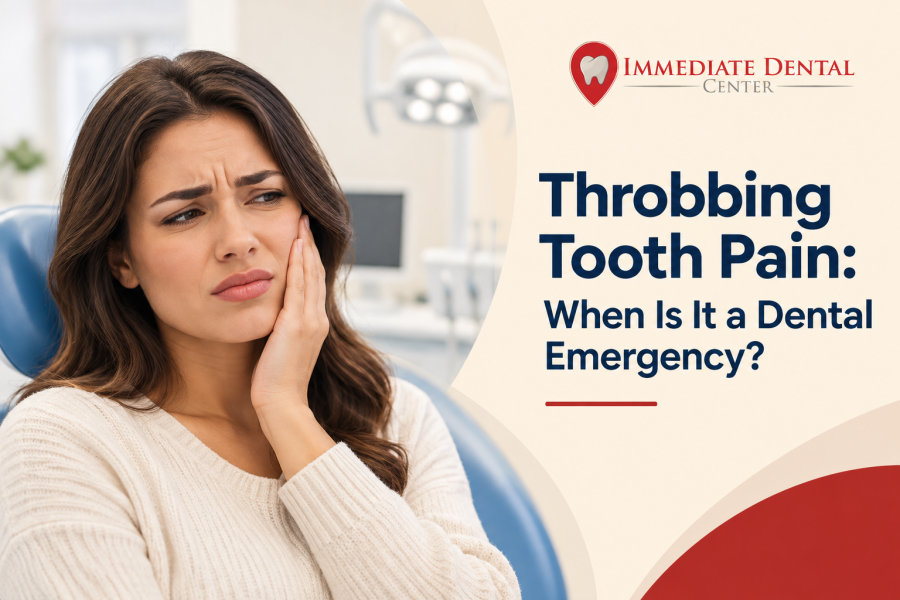
Throbbing tooth pain can be difficult to ignore, especially when it keeps returning or becomes stronger at night.
While not every toothache is an emergency, severe or persistent throbbing pain can be a sign that a tooth needs prompt attention.
The main question is simple: Can this wait, or should you see an emergency dentist?
Throbbing tooth pain may need urgent dental care when it is severe, keeps getting worse, prevents you from sleeping or eating normally, or occurs with swelling, fever, drainage, or dental trauma.
Contact an emergency dentist if your tooth pain:
You do not need to wait until the pain becomes unbearable before having it evaluated.
A toothache that keeps coming back is still a sign that something may need attention.
Throbbing pain is a symptom, not a diagnosis. Several dental problems can cause it.
A cavity may not hurt when it first develops. As decay moves deeper into the tooth, it can begin irritating the sensitive tissue inside.
You may notice pain when eating something sweet, hot, or cold. If the problem progresses, the discomfort may become more constant or begin throbbing even when you are not eating.
An infection around a tooth can cause intense, pulsating pain.
Other symptoms may include:
A dental abscess usually needs treatment to address the source of the infection.
If you are noticing swelling along with your toothache, read our guide to dental abscess symptoms.
A fracture can expose or irritate the inner layers of a tooth.
Some cracks cause sharp pain when you bite. Others create a deeper ache that comes and goes.
Pain may become more noticeable when pressure is released after biting or when the tooth is exposed to temperature changes.
If part of the tooth has already broken away, our guide on what to do with a broken tooth explains what you can do before your dental visit.
A tooth can become painful after being hit even if it does not look broken.
Falls, sports injuries, car accidents, or biting down unexpectedly on something hard can damage the tooth or the surrounding tissues.
Pain that starts after an injury should be evaluated, especially if the tooth feels loose or has changed position.
Intermittent pain can be easy to dismiss, especially if the tooth feels normal between episodes.
But pain that disappears temporarily does not necessarily mean the problem is gone.
A damaged tooth may hurt only when you bite. Temperature sensitivity may appear only when drinking something cold. Infection-related discomfort can also change over time.
If the same tooth keeps hurting, it is worth having the cause evaluated instead of waiting for the next flare-up.
This can be confusing.
Sometimes severe tooth pain decreases because the nerve inside the tooth has been badly damaged. That does not necessarily mean the underlying dental problem has gone away.
If you recently had significant tooth pain and it suddenly disappeared without treatment, the tooth should still be checked.
It depends on what else is happening.
A mild toothache without swelling, fever, trauma, or severe pain may sometimes be manageable until a dental office opens.
Severe throbbing pain is different.
If you cannot sleep, the pain is getting worse, or you are developing swelling, waiting may not be the best option.
You can learn more in our existing guide about severe tooth pain that won't go away.
Temporary measures may make the pain easier to manage, but they do not fix the underlying problem.
Until you can be seen:
Do not place aspirin directly against the tooth or gums. It can irritate soft tissue.
Most toothaches are best handled by a dentist because a dentist can address the source of the dental problem.
Some symptoms need immediate medical attention.
Seek emergency medical care if swelling is making it difficult to breathe or swallow, or if swelling is rapidly spreading into the face or neck.
You do not have to wait for tooth pain to become unbearable before having it checked.
If the throbbing keeps returning, wakes you up, makes eating difficult, or is getting worse, a dental evaluation can help identify the cause and what needs to happen next.
If you need urgent dental care in Indianapolis, visit Immediate Dental Center to learn how to get help.